(Bucatini) Pangrattato with Crispy Eggs

(Bucatini) Pangrattato with Crispy Eggs

Often when my husband is out for the evening, I make myself some kind of simple pasta dish, usually relying on things we already have on hand. I’ve done Deb’s Simplest Spaghetti al Limone and her Foolproof Cacio e Pepe, but I wanted to try a new one. The Spaghetti Pangrattato with Crispy Eggs from Smitten Kitchen Every Day looked delicious and I had everything except the spaghetti. I used bucatini, despite Deb’s low opinion of it.

Pangrattato is an Italian topping that is essentially bread crumbs sautéed in olive oil with whatever herbs and seasonings sound good to you. Having had another pangrattato via Bon Appétit’s Winter Squash and Kale Pasta with Pecan Breadcrumbs I knew it would be delightful. (And yes, you should make that Bon App recipe, but don’t use noodles, use a rigatoni or something else you can more easily stab onto a fork next to a chunk of squash.)

This is pretty simple. While the water came up to a boil I made the pangrattato, using panko for extra crunch, and omitting the lemon zest because all our lemons had seen better days. I did eventually nudge the heat on the pangrattato up a notch because it’d been going for probably three minutes and I didn’t see any change in color. Once I turned up to medium low, it finished up pretty quickly. At that point the pasta went into the pot and I started on the egg.

I was a little nervous about the crispy egg but I’ve read about making these and watched videos so I decided to just trust the process. (Here’s two minutes of Kenji López-Alt being extremely opinionated about fried eggs while demonstrating the technique.)

I let the oil get just to where I saw it shimmering, got it mostly onto one side of the pan, and cracked the egg in. (In retrospect I should have cracked the egg into a little bowl and then poured it into the oil. I didn’t get any shell into it but there is no way you’re fishing that out when you’re making a crispy egg.) The egg puffed up pretty quickly and started browning at the edges almost right away. I spooned some oil over a few times and tried to keep an eye on the bottom. When it looked good to me I took it out and I actually just let it sit on a clean spot on the cutting board. I did have a hard time getting the egg out — it kept flipping over — but we got there.

I realized too late that I didn’t save any pasta water, so I combined the oil you use to finish the pasta with a little splash of white vermouth. I also tossed in some of the pangrattato to get a bit of it incorporated into the dish. And yes I did add parmesean to the pangrattato.

This was a very tasty and simple meal. I liked the addition of the egg and enjoyed how savory and crunchy it was.

Some bucatini is tangled up in a shallow white bowl, topped with golden brown pieces of panko. A crispy fried egg sits on top. The whites are bubbled and the edges are golden brown.
Spaghetti Pangrattato with a Crispy Egg from Smitten Kitchen Every Day.
Sheet Pan Chow Mein

Sheet Pan Chow Mein

Deb recently shared this Sheet Pan Chow Mein on Instagram, and I immediately saved it and queued it up for an upcoming dinner. I like that it’s vegetarian and that it’s not similar to anything else we already make. Deb’s recipe is a spin on something from one of Hetty McKinnon’s cookbooks, which may or may not be this recipe for Crispy Sheet-Pan Noodles with Glazed Tofu.

Based on what I saw in the comments I didn’t quite follow the instructions to the letter. Folks were saying that their veggies burned, so I roasted the veggies using my own experience of how quickly things roast in my oven. I had also seen folks on Instagram saying there wasn’t enough sauce, so I doubled it (and used 1 TB each of hoisin and oyster sauce). I also added 1TB of rice vinegar, as I’d seen someone saying it wasn’t acidic enough. When I tasted I agreed and I think the addition of rice vinegar balanced it perfectly.

I used 2 small broccoli crowns, 8oz of sugar snap peas, 2 carrots cut into coins, a can of baby corn (cut in thirds, they were huge), and a red bell pepper. I used two sheet pans and kept each veggie to itself, so I could easily pull them off if they needed to come out of the oven. (I used a bowl to toss them in the oil and salt.) For the first roast, the carrot and pepper came out after 10 minutes, and everything else went for 5 more.

If you don’t have a lot of experience to draw on, either in general or with your current oven, my recommendation is to let everything go for 10 minutes, then check and start checking again every 5. When in doubt, take them out, as they’ll continue cooking even if you take them off the tray. Not to mention that they’re going back in again later.

I mixed the veggies together and then they went back on one sheet pan while I did the noodles on another. The veggies roasted again for 10 minutes. The noodles roasted for 15 minutes total, but probably could have used another 5. The texture was good but there weren’t really any crispy bits. I think this will vary widely depending on the thickness of your noodles, how wet they are when they go in the oven, and whether you use a silicon mat or just oil the sheet pan. (I used a mat.)

Deb calls for egg noodles, so I had gotten the Manischewitz fine egg noodles. But since I got them from grocery delivery I didn’t know that they are very short and definitely not what you’re looking for here. I’d use some kind of wheat-based noodle; you could even get a couple of packages of instant ramen. I happened to have some Somen on hand so I used that, which worked just fine.

We enjoyed this, and it was easy to put together. You could easily chop the veggies ahead of time (or get them pre-chopped). If you wanted you could do the first roast ahead, and then just roast them a bit longer while the noodles are in the oven. It’s also the kind of thing where you can definitely use whatever veggies you like, so this is a great recipe to keep on hand as a clear out the fridge option. I think the key there is to keep a close eye on the veggies so you can pull things out as they need.

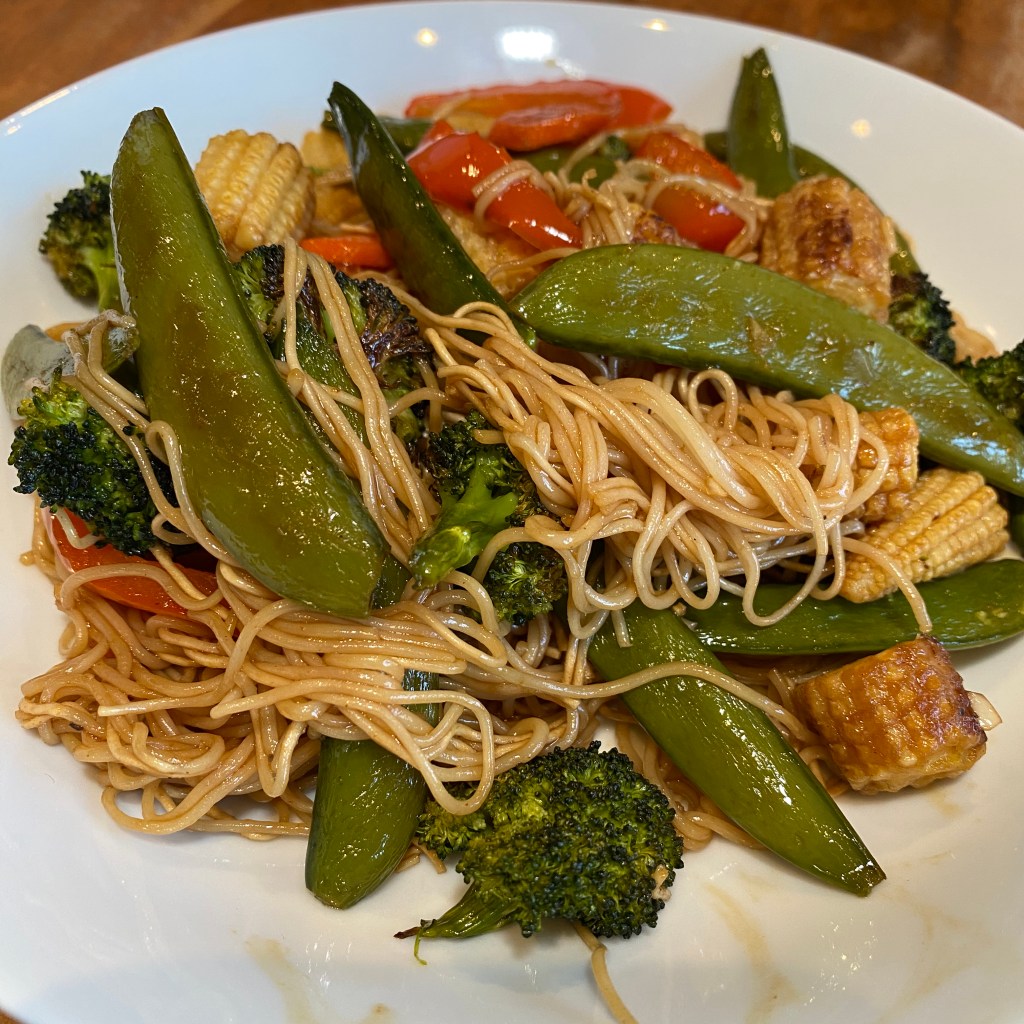
A shallow white bowl contains a pile of thin noodles covered in a light brown sauce. There are sugar snap peas, broccoli, baby corn, and red bell peppers tangled in the noodles. All the veggie shave signs of being lightly roasted.
The Sheet Pan Chow Mein from the Smitten Kitchen Blog.
Chocolate Stout Cake

Chocolate Stout Cake

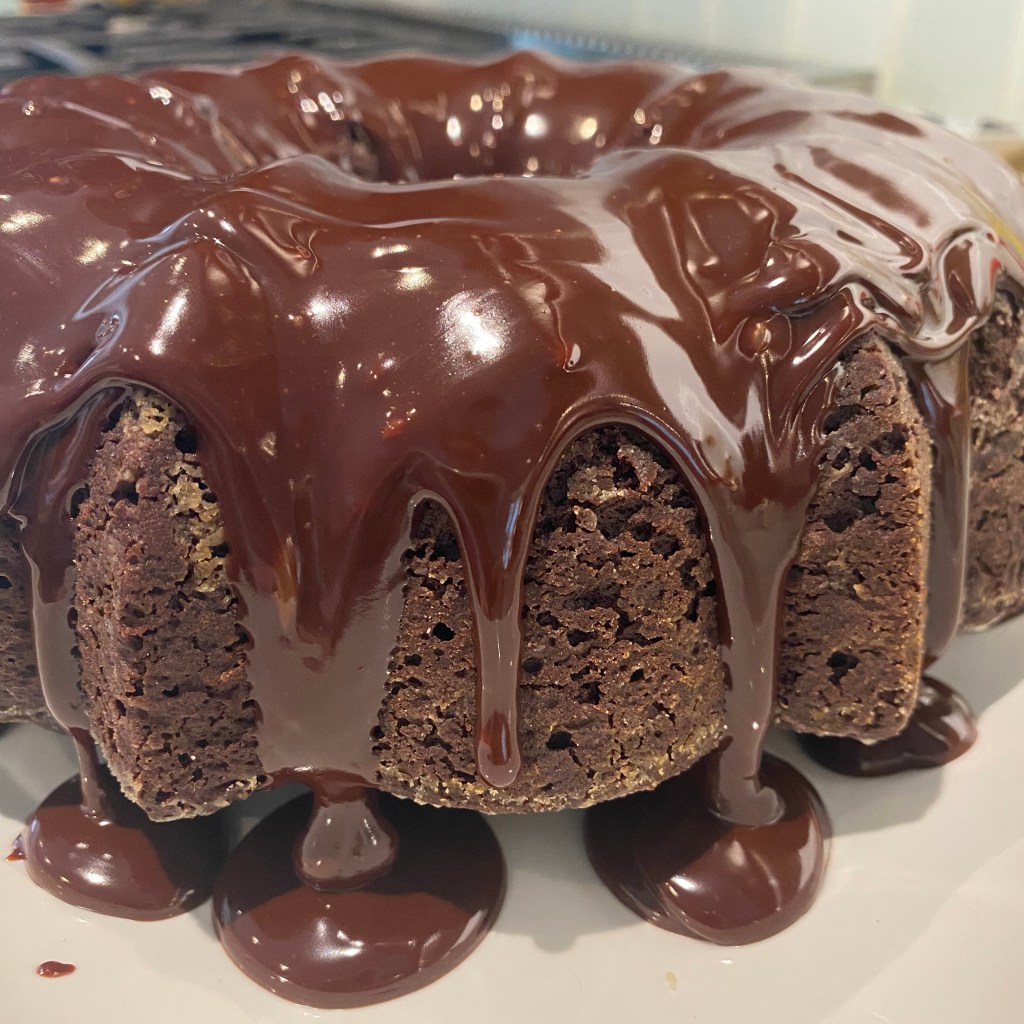
I made this Chocolate Stout Cake for a St. Patrick’s Day party, and it was a hit with kids and adults alike.

For reasons I do not understand, I didn’t read through the headnotes and recipe before I started. If I had, I would have known to start with the stout/butter/cocoa powder mix, and then let that cool while I continued with everything else. That would have saved a little time, but it’s not really necessary.

I skimmed through the comments while it was in the oven, and saw that for at least a couple of folks, the cake wasn’t done at 35 minutes, that in some cases it needed up to an hour. I checked it at 35 and sure enough it wasn’t done. I put it in for another 10 and that did the trick.

I also saw a few comments about the cake sticking in the pan and only coming out in pieces. There is a note in the recipe itself about greasing the bundt pan well, so I had coated it with melted butter and then dusted it with flour (should have used cocoa powder but I wasn’t about to wash out the pan and do it over).

I made the cake the evening before the party, so that I didn’t have to worry about timing things to give it enough time to cool before I topped it with the ganache. So, that worked out well for me because I had plenty of time for it to cool completely. I left it in the pan until just before I went to bed, and then tried to flip it out onto a cutting board with no luck. I left it upside down overnight figuring it’d either free itself or not. And it did! It released beautifully but you really do need to let it cool for several hours.

Deb mentions in the recipe that she’d cut the original ganache down by 75% and even so, it’s too much. The proportions were easy to play with so I decided to do half of the original amount. Except I measured out twice as much heavy cream as needed, so once the chocolate melted it was confusingly thin. It did not start to thicken up at all when I took it off the double boiler, and that’s when I realized what I’d done. I threw in more chocolate and then had a better consistency.

I decided to let the ganache cool a bit before I topped the cake, so I just set it on the counter and stirred frequently to keep a skin from forming and monitor the consistency. Then I spooned it over the cake and tried to make sure it didn’t all drip into the middle. I topped the cake on the platter so the excess could pool, but if you don’t like the look you can put it over a rack on a baking tray and then move it. In the end I had what I think was just the right amount of ganache, so if you make this, make the amount Deb calls for. But let it cool a bit, so it’s moving slower and won’t all run right off the cake.

The cake is light and moist. It’s very chocolately, but even with the ganache I didn’t find it to be too rich. There was one small piece left that we took home. It sat on the platter very loosely wrapped with plastic wrap (and a kitchen towel to keep the cats away, as the wrap didn’t quite cover the whole platter). That piece was still moist and delicious 48 hours after the cake was baked. This is something for your make-ahead files for sure. It’ll keep well on the counter, just make the ganache the day you plan to serve it.

A side view of a chocolate bundt cake with chocolate ganache dripping off of it. The cake appears to be hovering over a white platter, with chocolate pooling underneath it. The ganache is shiny, which distracts you from a few spots where you can see the flour used to coat the pan.
The Chocolate Stout Cake from The Smitten Kitchen Blog.
Pasta with Longer-Cooked Broccoli

Pasta with Longer-Cooked Broccoli

We like broccoli around these parts and so the Pasta with Longer-Cooked Broccoli captured my interest when Deb posted it recently(ish). Despite the timing she gives (45 minutes) it is very weeknight friendly and eminently prep-able. In fact I recommend that you prep everything before you turn on the heat, because the first few steps move fast. You’ll also want to pay close attention so you don’t burn the garlic, which can happen in a flash. This is one of those times to cook with your senses and not with your timer.

I made this in my dutch oven so I’d have plenty of room to stir. But it holds a lot of heat, so in addition to being very attentive I adjusted the heat down once when I added the lemon juice & etc., which I did as soon as I saw a couple of small pieces of garlic starting to brown.

My other recommendation is to use a pasta brand and shape you’re familiar with so you can manage the time without worrying. Pasta always cooks faster for me than what the packages say, so I did my usual pasta routine, which is to check it at 5 minutes. In this case it was extremely al dente, so I let it go for two more and it was slightly beyond al dente, but not by much.

This was a very tasty dinner and the pasta and broccoli ratio was pretty perfect. We had the Crispy Chili Garlic Butter Shrimp with this, so I think we’ll get at least 4 servings from it. This would work really will as a vegetarian one-pot meal, but if you also want to have some protein, you could throw in a can of drained white beans while the pasta is finishing up, or do a simple baked chicken or fish.

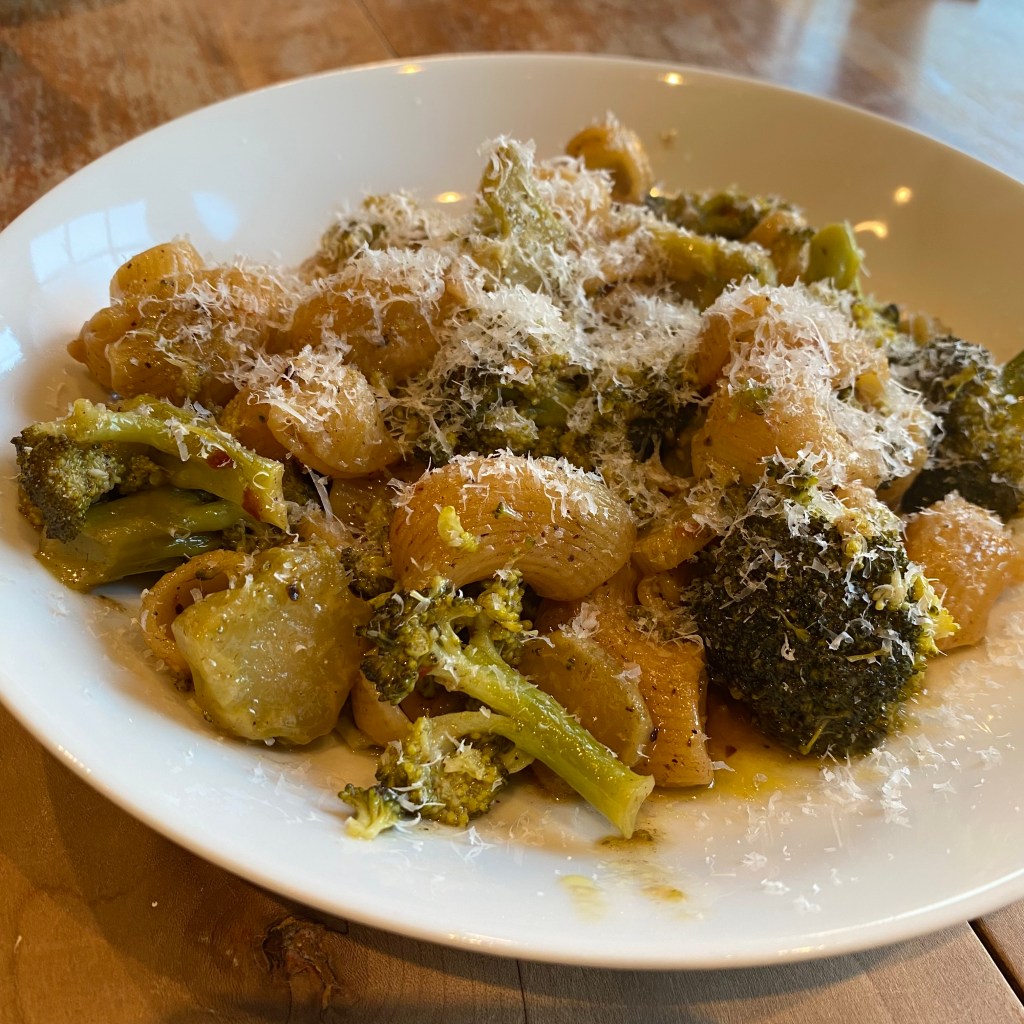
A shallow round plate contains a pile of broccoli and pasta that is mostly obscured by parmesan. The broccoli is an olive green and everything has a somewhat golden brown cast, which is not due solely to the poor lighting.
Pasta with Longer-Cooked Broccoli from the Smitten Kitchen Blog.
Focaccia Onion Board

Focaccia Onion Board

The Focaccia Onion Board is one of those dishes that I could practically taste when I read the recipe. I made it for dinner, served alongside this Kale and Roasted Vegetable Soup from Simply Recipes, which is one of my favorite winter soups.

Like the Ligurian Focaccia, I made this in my quarter sheet pan. Deb calls for a 9×13 pan, but I suspect that’s because she anticipates most folks will have one. A quarter sheet pan is a smidge wider and barely shorter (9.5″ x 12.8″), so I knew the dough would fit. I also figured I’d get a better result, as my 9×13 pan is glass. Note that if you do use a glass pan for this, some commenters indicated that the dough stuck to it mightily. Apparently if you butter the pan before putting in the oil that solves the problem.

If your 9×13 pan is also glass, I recommend that you get a quarter sheet pan if you have the space and funds. It’s nice to have some smaller rimmed baking sheets around (I also have a couple of eighth sheet pans) for little jobs like toasting nuts, and you can also use them for prep. Nordic Ware Naturals is the brand to get.

Anyway, I let this rise on the counter for about four hours, which is twice as long as Deb calls for. But my kitchen is cold and I knew it wouldn’t be out long enough to get weird. This worked perfectly, though I’m not sure how much that was aided by the oven being on for part of that time. (I roasted the veggies for soup in the afternoon, they’re easier to handle if they’re cool.) I did get a lovely rise and the dough was very light and airy when I got it into the pan.

The only other change I made was to bake this on top of our pizza stone. Partially because it turned out to be in the oven, but also because I knew that would help ensure the bottom was crisp.

I’m fairly happy with how this turned out, but I have a few pointers. Deb says that this is supposed to be “deeply golden brown at the edges and across the top” after 25 minutes. Mine was barely golden at the edges at that point, so I put it in for 10 more minutes. I liked the color better at that point, but it still wasn’t “deeply golden brown.” But if you look at the photos on her site, it’s much closer to what I wound up with — lightly golden.

As you will see I did run into trouble with the onions. I overcooked them on the stovetop, so they burned in the oven, especially with the extra 10 minutes. I quickly pulled off some of the worst, but I’d say to err on the side of getting less color on them on the stove. Definitely look at the reference photos she’s got on the recipe to guide you.

This is much less salty than what I think of when I think of focaccia. But this is a spin on an Eastern European flatbread, so I don’t think it’s supposed to be. And it’s meant to go alongside a spread of bagel-type toppings like cream cheese, lox, etc. So if you are planning to do that, I think it’ll be pretty perfect.

I can see myself making this again for a brunch, or as a bread to serve when I’m making something for dinner and wish I had bread to go with it but didn’t anticipate that 24 hours prior. But if I’m making focaccia, I’m going to stick with the Ligurian Focaccia, and maybe add onions to that if I feel so inclined.

A white plate holds six squares of bread. The bread is very lightly golden brown, and has a focaccia like texture. It's topped in poppy seeds and slightly overdone caramelized onions.
The Focaccia Onion Board from The Smitten Kitchen Blog.