I’ve been waiting for an excuse to make the Spicy Crushed Olives with Pistachios from Smitten Kitchen Keepers, and I decided they’d be a great snack before dinner when we hosted Friendsgiving this year.
This is a super simple recipe to make, so I put it together a couple of hours before I told our guests they could arrive. Iit came together very fast, especially since my husband had already shelled and chopped the pistachios for me the day before.
Folks seemed to enjoy this, and it went well alongside the two cheeses I’d gotten (a mini wheel of Harbison, and a wedge of Brabander Reserve). The leftovers are holding up well in the fridge, and I think this would be easy to scale up or down as needed.
I used castelvetrano olives, and figured out that a half-pound of pitted olives was almost exactly two cups. I do think this would work pretty well with any unstuffed green olive, but the castelvetranos are nice because they’re large, so the stand up to the crushing and there’s lots of surface area for the pistachios to adhere to.
The Spicy Crushed Olives with Pistachios from Smitten Kitchen Keepers.
This was our sixth year hosting Thanksgiving, and as with the past several years this one was a Friendsgiving. This year we had 8 people in total, which is a little bigger than average but completely manageable.
Rather than stressing too much about making enough sides, I have a core menu of what I make and then I ask guests to bring a side, a dessert, and any wine they want to have. That tends to work out well and ensures a pretty good spread. Here’s what I made this year.
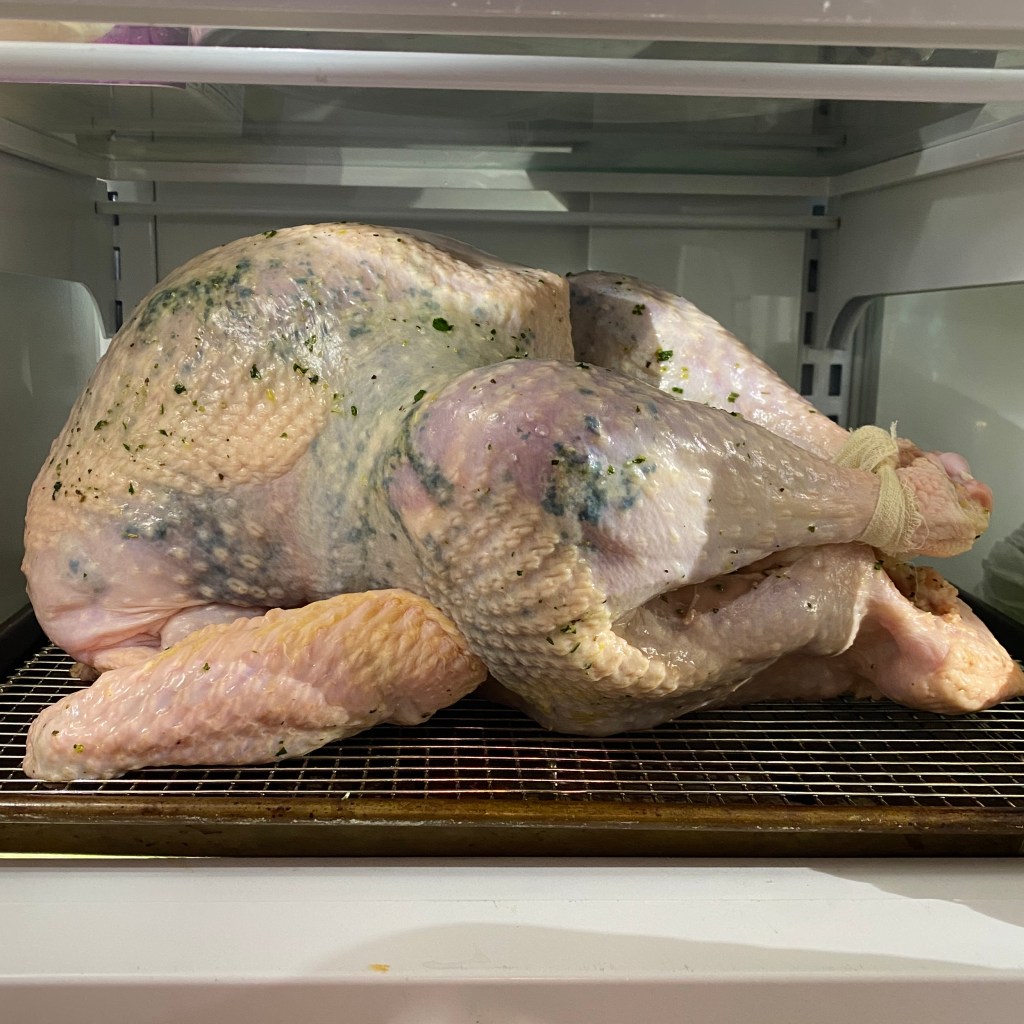
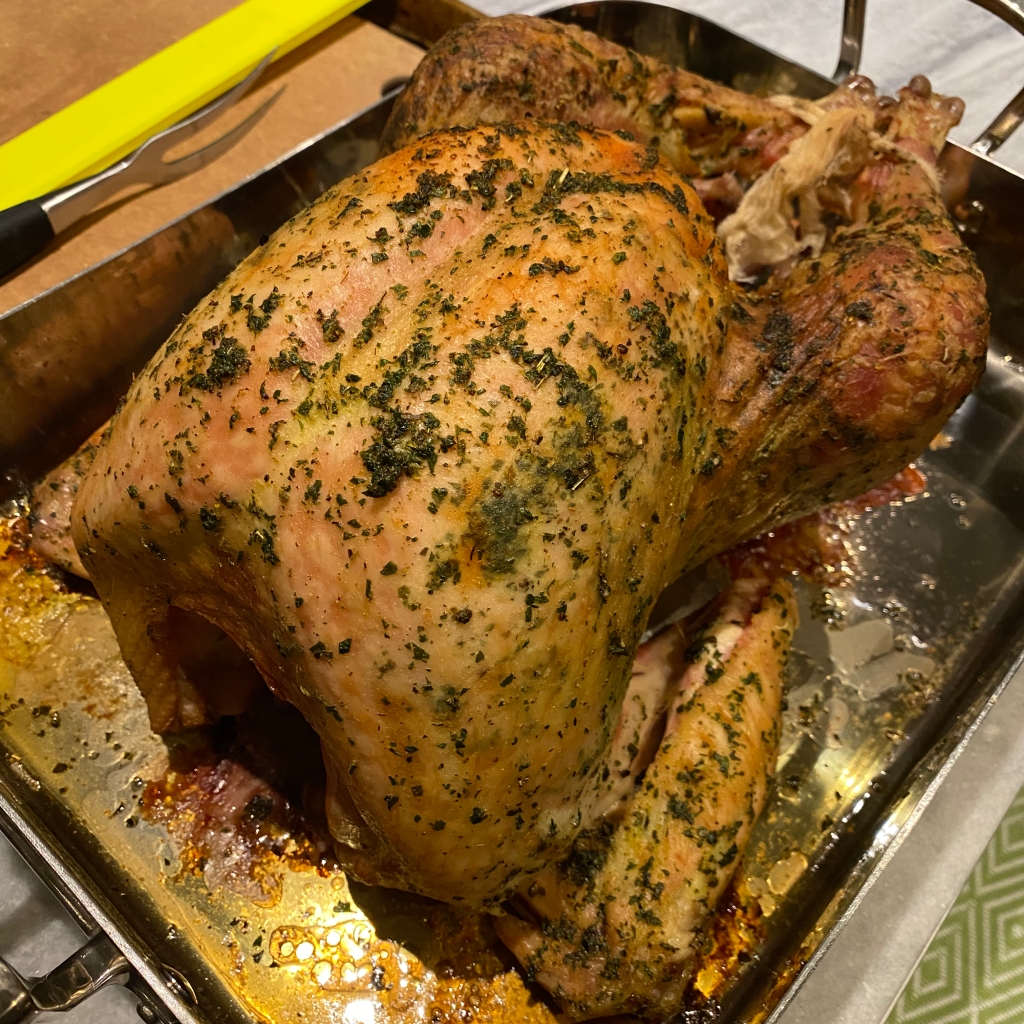
Roast Turkey and Gravy with Herbes de Provence and Lemon from Cook’s Illustrated, with a pasture-raised turkey from Open Book Farm. I sort of made this last year as well, but I had a larger turkey and followed a different technique to cook it in pieces. This year I had a smaller bird so I made this as written. Don’t let the dry brine method freak you out. While it is a little weird to have an uncovered turkey in the fridge for a couple of days, nothing bad happens to it or to the other food in your fridge.
There are a few things I like about this recipe. First, it introduced me to dry brining. It is way easier than doing a wet brine (particularly if you’re using a brining bag, which I was.) Less fuss, because you don’t have to constantly rotate the turkey in the brine. Less chance of the brine bag springing a leak and creating a biohazard zone in your fridge. And equally great results. I am a dry-brine convert now.
Second, I like to add a lot of herbs to my turkey and this one has a lovely mix of fresh parsley and dried herbs de provence, which just make things feel fancy. (If you don’t like herbe de provence, any dried herb blend you do like would work here.) This year I used Spicewalla Herbs de Provence, but I’ve also used and liked the Penzey’s blend.
Third, I appreciate that the gravy recipe carries that herbal flavor through. I do make a couple of changes to it, though. I make it ahead of time (stopping right before you add the herb paste) and use chicken stock instead of water. (I make my own with a carcass from a roasted chicken that I save in the freezer, it’s super easy to make stock in an electric pressure cooker. I don’t worry about adding any veggies or even seasoning it, I do that whenever I use it.) I skipped adding the drippings this year; I did it last year and didn’t really feel like it added quite enough flavor for the added hassle. So when the recipe calls for drippings, I used a mix of butter and olive oil.
Rustic Bread Stuffing with Cranberries and Walnuts from Cook’s Illustrated. Stuffing, made outside of the bird, is a must for me. I like mine made out of the bird, with no protein. I’ve made this one every year, with all different kinds of bread. In my opinion, it’s best with a whole-wheat bread of some kind. It’s difficult to gauge how much bread to buy, but I’ve found that a (slightly crowded) half-sheet pan is perfect for us. This year I used a rustic loaf from Panorama Bakery which crisped up beautifully in the oven. I have tinkered with this recipe a bit, adding more cranberries and walnuts. And one year I replaced the onions with caramelized onions, which I thought was pretty tasty.
Kale Salad with Pecan Vinaigrette from Bon Appetit. Another one I’ve made before. This is a great way to add something green to the table, and it adds a nice contrast to the rest of the plate. It’s also easy to make ahead and stores well. We assembled this just before dinner this year, but it actually gets better the longer it sits with the dressing, so you could easily put this together during some down time earlier in the day.
I made some very simple, no recipe roasted butternut and acorn squash with frizzled pepitas and rosemary. I cut the neck of the butternut into thin half moons, and cut the acorn squash into ruffly crescents (you can leave the skin on) and roasted them on sheet pans with salt and pepper. Then I stacked them neatly into a small serving dish. While they were reheating, I frizzled some roasted, salted pepitas and fresh rosemary in a little bit of olive oil, and then sprinkled it over. (Yes, I stole that idea directly from the Sweet Potato Salad with Warm Pepita Dressing.) In the past I’ve made the Twice-Roasted Squash with Vanilla, Maple, and Chile from Bon Appetit, which folks have also enjoyed.
Simple Cranberry-Orange Sauce from Just Add Sauce. This is a straightforward cooked cranberry sauce that I really like. The orange adds a nice dimension to it and it’s easy to scale up or down depending on how many guests you’re having.
For the last couple of years I’ve also been experimenting with trying to get a salsa verde with autumnal herbs on the table but they never turn out quite right. At this point I think I’m going to give up on that since there are plenty of other flavors.
Our dessert contribution was from my husband, who made the Pecan Pie from the Smitten Kitchen blog, which is an incredible pie. (He also helped with some of the prep on Wednesday and was in charge of all random grocery runs, of which there were two this year.)
Here’s a look at the spread, along with the other sides our guests brought (minus the roasted broccoli with breadcrumbs, which was still in the oven). Everything was delicious and we had a wonderful time. I did make myself some notes for next year, and I’ve already spied a new stuffing recipe I might try, but overall this was a great menu that I would happily make again.
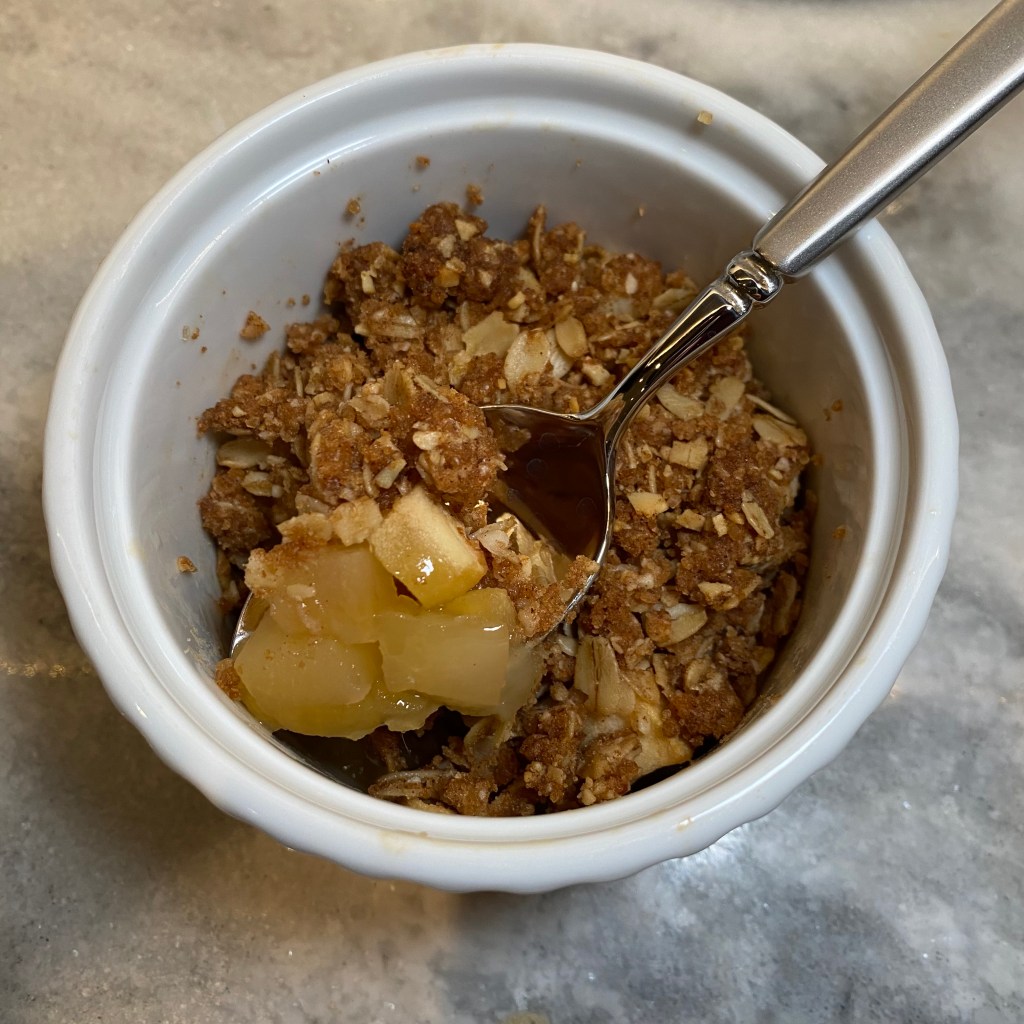
I’m not sure what it was about the Multigrain Apple Crisps that stuck out at me, but I made them recently and they’re delightful, and don’t feel at all like you’re missing out on anything.
I made a half batch using two huge apples. I’m not sure what type they were, they worked fine in the recipe but didn’t throw off any liquid in the oven. This season I’ve been getting Crimson Crisps at the farmer’s market, but I think these are another variety that I must have grabbed instead as they’re a lot bigger than Crimson Crisps and the color was slightly off.
For the topping I used whole wheat flour. I liked the technique of blitzing some of the oats and the slivered almonds in the food processor, it added a nice texture, and the whole wheat flour sort of deepened the flavor. You’ll definitely want to find some turbinado sugar for this. It adds to the texture, and I think you’d also end up with something far too sweet if you just subbed granulated sugar or brown sugar.
These were good on the first night, but I think they were actually better on the second night, after they’d spent 24 hours in the fridge. I warmed them back up in the microwave and the apples had broken down just a little bit more, which I liked.
The only change I made to this was to the spice I added to the pepitas. I used chili powder rather than crushed red pepper. I think crushed red pepper would work perfectly well here but since I have a big spice drawer I thought I might as well stay on theme. Also when you’re making the pepitas, don’t add salt if you used roasted salted pepitas. That’s what I had and the dressing is a tad salty.
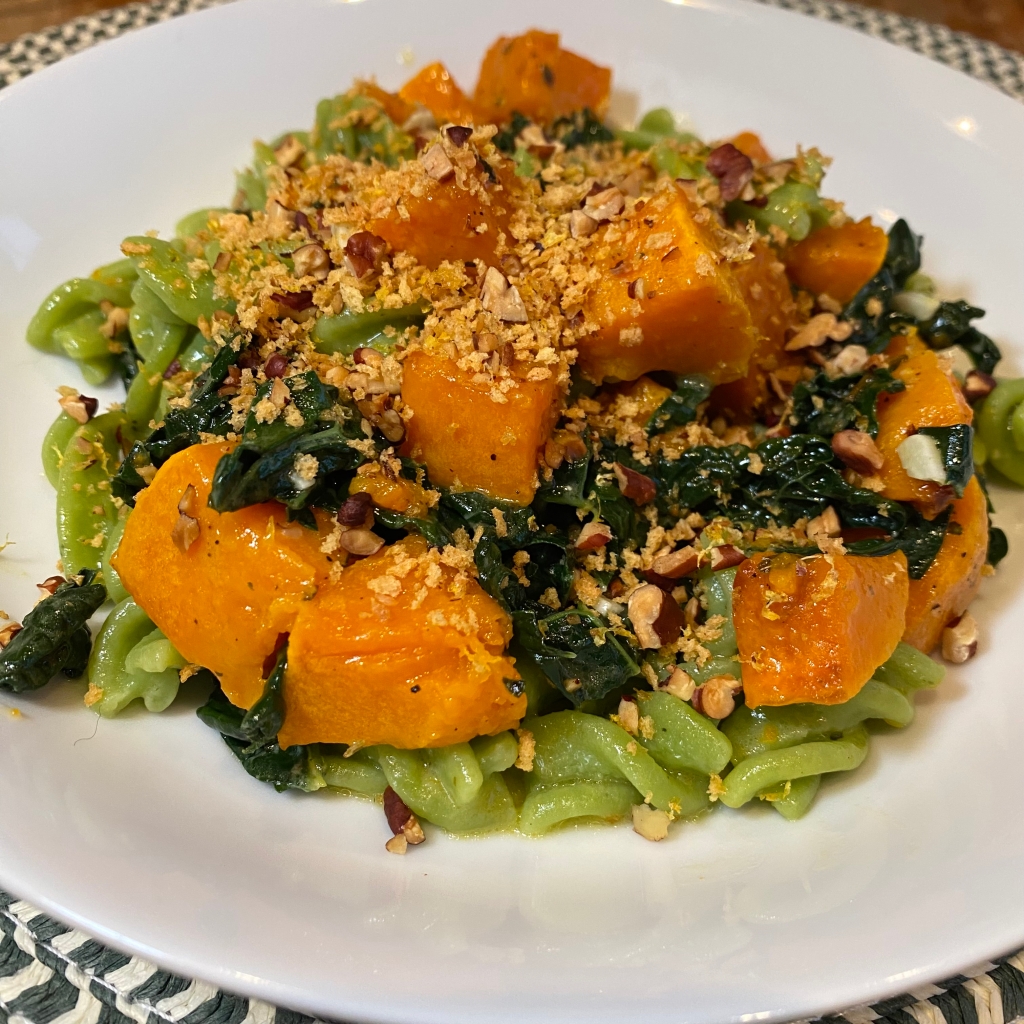
This was a very easy vegetarian dinner that left me with enough leftovers for a few lunches. It’s more than the sum of its parts, and very customizable. It would also be great to take to work or to a party to share, because while it’s delicious warm it’ll also be good at room temperature. Plus if you serve it as the individual components, folks can customize to their heart’s content.
This is also a great combination of flavors for topping whole roasted sweet potatoes. Or you could throw this over some brown rice to stretch it a bit.
Overall this comes together pretty easily. The only trick of timing is that you need pasta water to help wilt the kale, but then the pasta is sitting for about 5 minutes before you put everything together. Not a huge deal, but in my opinion this part of the instructions sort of gives it away as a restaurant recipe adapted for the home cook. You could easily just use tap water and add some salt. Since you don’t really make a sauce for this, you don’t need the starch from the pasta water quite as much as you might in other recipes.
In terms of the changes I made, some were driven by the comments, where folks noted this made a lot more servings than anticipated. To make two generous servings, I use about 1.5 pounds of squash, a whole bundle of lacinato kale, and about 6 ounces of pasta. And I make about 1/4 recipe of the pecan and panko topping, otherwise we tend to have a lot left over.
For pasta, I use some kind of shape instead of spaghetti. It’s much easier to get a relatively even distribution of squash and kale that way. You can use whatever shape you like. This time we had handmade kale rotini that we got at the farmer’s market, which made for a very pretty dinner.
Any kind of winter squash will work here, so use your favorite. I often make this with delicata, but it’s good with acorn squash and butternut squash, too. You can always choose based on which type of squash is about the right size.
The flavors here are fairly subtle, so don’t skimp on seasoning your squash and salting your pasta. And don’t worry about measuring out the exact amount of lemon zest for the topping, just get a bunch in there. I also make sure to use a lot of parmesan cheese at the end, and never skip the lemon juice.


 alisonkcody.com