Why haven’t I made that?

Why haven’t I made that?

I recently saw Deb Perelman speak as part of the tour for her new cookbook, Smitten Kitchen Keepers: New Classics for Your Forever Files. It was a delightful evening full of good vibes. My favorite part was the low susurration every time she mentioned a recipe from Keepers, as folks flipped through their new copy to dog-ear the page.

I have all three of her cookbooks, have followed her blog for quite a while, and cook from her recipes regularly enough that when my husband asks, “where’s this recipe from?” I just say “it’s one of Deb’s” if it’s one of Deb’s. But her hearing her speak left me inspired to try and cook her recipes more deliberately. Truly, why haven’t I made the Pizza Beans or the I Want Chocolate Cake Cake? When have I ever not wanted pizza or chocolate cake? (Never, that’s when.)

I’ve never been particularly attracted to the idea of cooking every recipe in a book. But Deb has three cookbooks and a long-running blog, surely I could commit to making one Smitten Kitchen recipe every week in 2023? Then I thought about something I heard somewhere — why wait to start something new until an arbitrary future date? Just get started now!

And that’s when I realized that I had actually already started this project when I made the Apple Cider Old-Fashioned last week, and planned the Soy-Glazed Tofu with Crisped Rice for this week. Both are from Keepers, so it’s like it was meant to be.

So, welcome to Why haven’t I made that? in which I will make one Smitten Kitchen recipe every week. That’s it, that’s the plan.

I expect most of them will be for dinner, and I’ll lean into making things I haven’t tried before, but I’m not going to box myself in with rules. The plan is to cook Deb’s food and share it here with (all five of) you, in hopes of inspiring you to make that thing you haven’t made yet, whether or not it’s one of Deb’s.

I’ll link to recipes when Deb’s posted them somewhere, but I’m not going to provide the recipes here or link to other blogs where folks appear to have transcribed them. While recipes themselves are not protected by copyright law, Deb has put a lot of work into developing her recipes and I want to honor that. If you want to try a recipe from one of her books, see if you can get a copy from your local library or borrow a copy from a friend or neighbor.
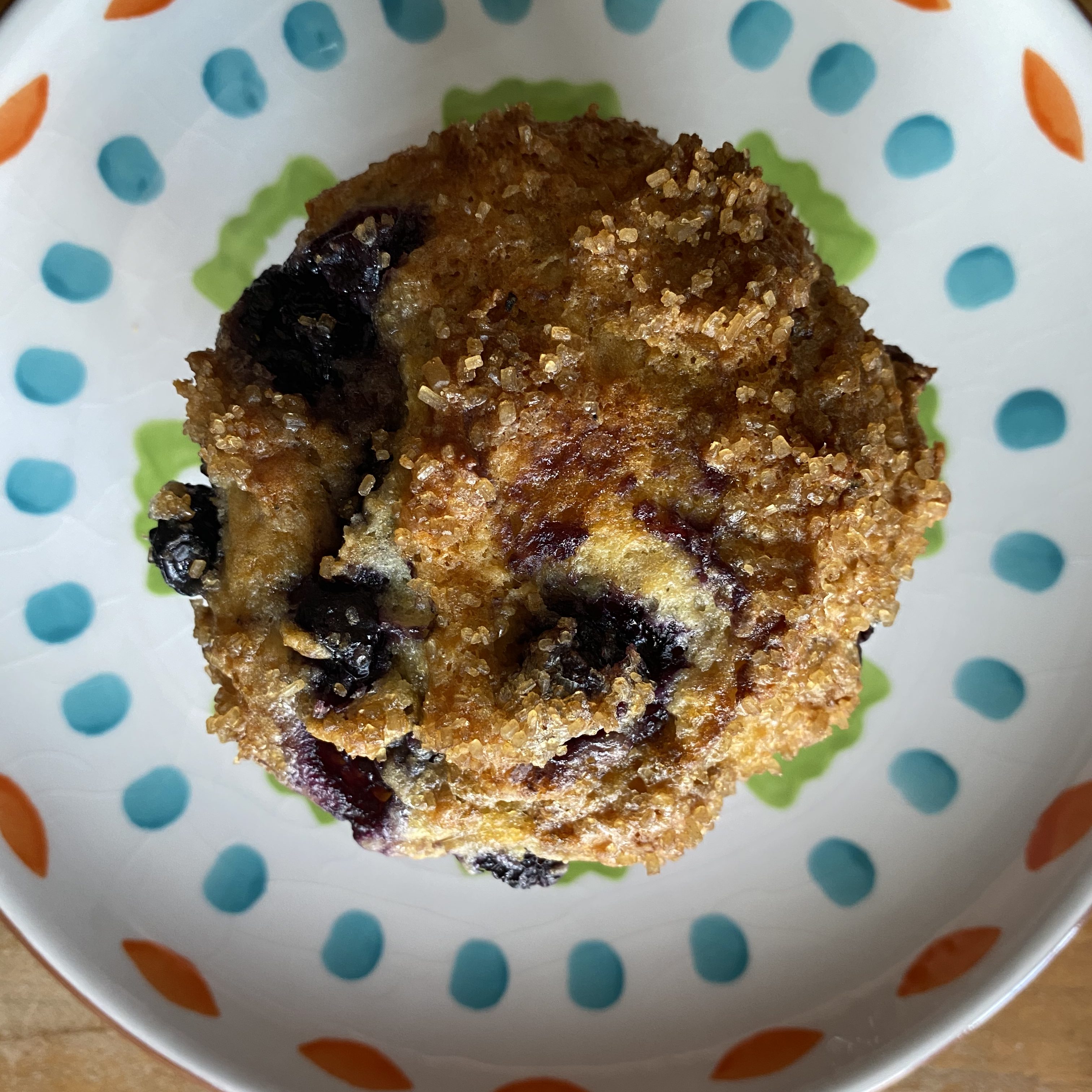
A top-down photo of a blueberry muffin on a colorful plate. The muffin is golden brown, with large sugar crystals on top and several dark blue and purple berries peeking out. The plate has a white background with greek, teal, and orange brushstrokes in an abstract pattern.
Perfect Blueberry Muffins, which are in fact perfect.

Summer Reading

Summer Reading

Do you miss the days of choosing five books off of a long list to read over the summer? Is your to-be-read list where your best reading intentions to go die? Do you like it when opinionated people make decisions for you? This one’s for you.

The Lost Man, by Jane Harper: Assuming you’ve read Tana French (and if you haven’t, you start with either The Witch Elm or In the Woods), this is your next move, and it takes you to an Australian ranching community.

Every Anxious Wave, by Mo Daviau: This crosses High Fidelity with time travel. What else do you need to know?

The Library Book, by Susan Orlean: An absolutely wonderful book about the LA Public Library, and a huge fire there in the 80s.

The Luminous Dead, by Caitlin Starling: My book club loved this. We read it in 2019 and I still think about it. It’s full of atomospheric creepiness and is really well paced.

The Spellman Files, by Lisa Lutz: The first in a very fun series about a family of private detectives. Yes, they’re as dysfunctional as you think.

Hench, by Natalie Zina Walschots: So, you know how supervillians are surrounded by hench people? Well, what if one of them got really mad at a particular superhero and channeled her rage into big data?

The Water Knife, by Paolo Bacigalupi: If you read Gold Fame Citrus and have been wondering if there’s any other speculative fiction out there about the droughts in the Western US, there is. Read this.

Wanderers, Chuck Wendig: If you liked The Stand, and you’re ready for a novel about a respiratory pandemic, try this. (If it’s too long for you, pick up Severance by Ling Ma.)

Lastly, two wildcards:

A Marvellous Light, Freya Marske: The July book club book.

Something New Under the Sun, Alexandra Kleeman: The most recent book I started but am not going to finish. I got too irritated by a couple of the characters who feature prominently in the first chapter.

Verbal Venn Diagrams: Remote Work

Verbal Venn Diagrams: Remote Work

Verbal Venn Diagrams: Remote Work

A deliberately incomplete roundup of perspectives on a topic. This time, remote work.

The Remote Work Argument Has Already Been Won by Startups, Alex Wilhelm at TechCrunch

While big companies are reluctant to embrace remote work, startups are proving again and again that distributed teams work well. That’s not going to change just because large companies are resistant.

The Myth of the Productive Commute, Anne Helen Petersen at Culture Study

Very few among us had good commutes, but that time still may have served a purpose beyond getting between work and home, even if it was as simple as leaving the house and walking a bit. If you no longer have a commute, it’s worth figuring out how to create a time to transition that you don’t fill with work-related stuff.

Another Truth About Remote Work, Elaine Godfrey at The Atlantic

Are you still working from home? Then you definitely think significantly more people were and are doing the same. The high point was in May of 2020, when just 35% of Americans were teleworking due to the pandemic. It’s hard for us to see this because socially, we’ve become divided by income.

The Death of the Job, Anna North at Vox

Since the 1940s, Americans have increasingly been encouraged (or forced, depending on your job) to build our lives around our jobs. Remote work has helped some of us see that this isn’t to our benefit. What are the roots of that? What has it meant for us? And how can we dismantle this approach?

A Psalm for the Wild-Built

A Psalm for the Wild-Built

Once a month I recommend a novel that I’ve recently read and enjoyed. This time it’s the charming start to a new series by one of my favorite writers.

A Psalm for the Wild-Built by Becky Chambers

Tom Doherty Associates,
Libraries | Bookshop | Goodreads

Becky Chambers wrote one of my most beloved series, Wayfarers. So of course I came to this, the first book of her new series, with high hopes. I was so happy with what I found. 

The driving conflict in the book occurs well before the timeline that we’re in, when robots become sentient and humans decided that they weren’t going to try and force them into submission and continued labor. The earth is divided between human and robot territory, and the robots retreat into the wilderness. Centuries later, humans have survived and rebuilt civilization into something that looks much like before technology.

That’s something I’m doing. That’s not my reason for being. When I am done with this, I will do other things.

The story follows Dex, who is in search of something more in life and changes their vocation from that of Garden Monk to Tea Monk. As a Tea Monk they travel from place to place, offering comfort and conversation to people, essentially a type of counseling. They enjoy it, but it still isn’t quite enough.

This book is lovely. It’s calm and quiet, philosophical but not in an abstract way. At least one review found some aspects of the worldbuilding a little difficult to believe, but I didn’t find them distracting.

This is a short review because this is a short book, more of a novella, really. If you’re not sure this is for you, I’d encourage you to pick it up anyway. It won’t take you long to read, and you’ll likely enjoy being transported into the world Chambers has built.